How to Play

The Great Zimbabwe

2-5 players 90-150 min 7.8 Board Game Geek Rating

Ancient African tribal leaders compete to build impressive monuments honoring their chosen god. Players develop logistics networks to transport ritual goods, using craftsmen and resources strategically. Each god provides unique benefits but demands different victory requirements. Success requires balancing economic development, technology, and worship while optimizing limited actions per turn in this race.

Published 2012

The Great Zimbabwe

Get Ready

Setup the game with these step-by-step instructions before diving into your turn.

1
Understand resource types
Cattle, clay, wood, ivory, diamonds, and gold are considered resources; ritual goods (both primary and secondary) are not classified as resources
2
Note component limitations
Only cardboard pieces are limited (3 craftsmen of each type, shaman resources, water tiles); wooden pieces like monument discs, cattle, and resource usage tokens are unlimited
3
Respect starting locations
Starting locations block resource placement, craftsman placement, water tile placement, and monument placement
4
Set Victory Requirement cap
VR is limited to 40 maximum; no action can raise VR above 40, though Victory Points themselves are unlimited

On Your Turn

What you can do during your turn.

1
Take technology cards
When taking a technology card, you must also pay for and place that craftsman on the board during the same turn; multiple cards can be taken at once
2
Observe craftsman restrictions
One player can never place both the first primary and a secondary craftsman of the same type (color) on the same turn, nor take both technology cards of a single type (e.g., both potters)
3
Place craftsmen legally
Place craftsmen within range (without hub use) of a required resource not already in reach of another craftsman of the same type
4
Understand secondary craftsman effects
Placing a secondary craftsman immediately obsoletes all primary craftsmen of that type for upgrading; they only function to produce secondary ritual goods thereafter
5
Produce secondary ritual goods
Secondary craftsmen require both a primary ritual good (which needs a resource to create) and a resource of their own to create the secondary ritual good
6
Raise prices optionally
You may take a "place a craftsman" action solely to raise prices without actually placing craftsmen
7
Calculate range for resources
Range can never be extended via hubs for resources; you can count range through monuments without paying hub costs
8
Calculate range for ritual goods
Range can be extended via hubs for both primary and secondary ritual goods; when tracing delivery routes for ritual goods through any monument, you must use it as a hub and pay the bank
9
Select specialists or gods
You can only take either 1 specialist or 1 god card on a single turn
10
Activate specialists
When taking a specialist card, you must pay to activate them on the same turn regardless of whether you use their ability
11
Benefit from god discounts
Gods with discounting effects pay back retroactively any discount on items already taken (e.g., Gu grants a VR rebate on technology already owned)

Winning

How to claim victory.

1
Track Victory Requirement
Your VR determines how many Victory Points you need to win; VR cannot exceed 40
2
Accumulate Victory Points
VPs are unlimited and not capped like VR
3
Achieve victory
Win by reaching Victory Points equal to or exceeding your Victory Requirement

watch & Learn

Let the pros teach you with these top videos.

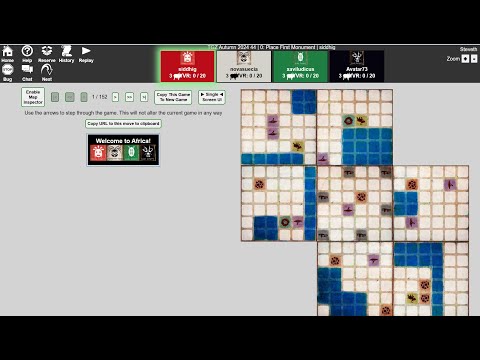
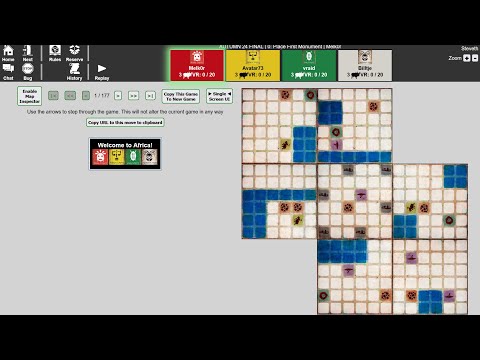
Exit Rush! 2024 TGZ Tournament Round 1 Game 44

Exit Rush! 2024 TGZ Tournament Round 1 Game 44

Instructional

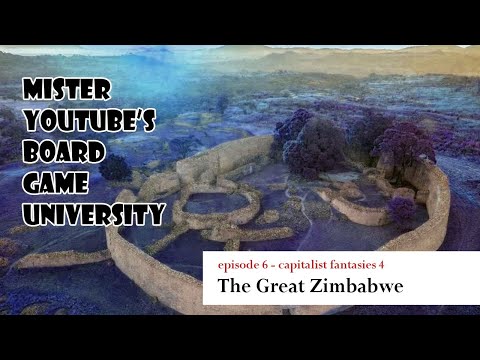
Great Zimbabwe - Czech how to play (TTS)

Great Zimbabwe - Czech how to play (TTS)

Instructional

MORE VIDEOS

FULL rules

Looking for the full details? Grab the complete rulebook as a downloadable PDF.

Play Board Games Online

Explore breakout hits and fan favourites with no downloads, setup or paywalls. Just click and play.

Play Now

more GAMES LIKE THIS