How to Play

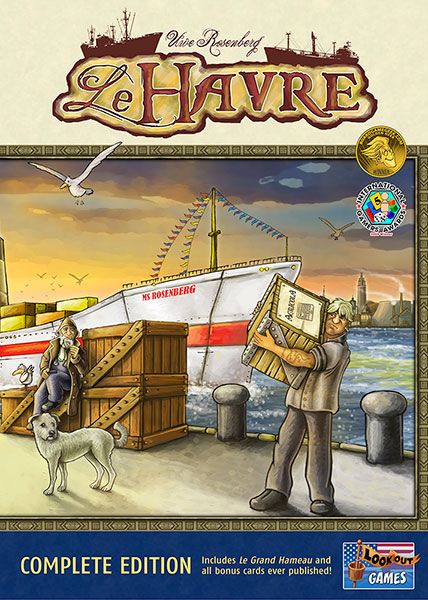
Le Havre

1-5 players 30-150 min 7.8 Board Game Geek Rating

Players collect goods and use buildings to upgrade materials, construct ships, or develop their own structures. Buildings generate income through entry fees from other players, while ships provide essential food for workers. After every seven turns, players must feed their workforce during harvest phases. Victory goes to whoever accumulates the greatest total wealth through cash, buildings, and ships.

Published 2008

Le Havre

Get Ready

Setup the game with these step-by-step instructions before diving into your turn.

1
Arrange short game round cards carefully
For the 12-round short game, do not intuitively remove round cards 13-18; check the rulebook for hollow checkmarks corresponding to your player count, as the final round numbers may skip rather than increase sequentially by +1
2
Understand building/ship acquisition options
Players can obtain buildings or ships through either construction (using resources) or purchase (using money), providing flexibility when resources are insufficient but money is available, or vice versa
3
Identify resource tiles by border color
Distinguish upgraded vs. non-upgraded resources by examining the border background color - lighter borders indicate basic resources while darker/deeper borders indicate upgraded tiles
4
Differentiate similar resource graphics
Some upgraded and non-upgraded resources look very similar (e.g., fur vs. leather, clay vs. bricks have nearly identical silhouettes), so always verify the border color first before confirming the resource type
5
Prepare visual aids
Have a magnifying glass or clear reading glasses ready, as the game requires vision of 2.0 or better to read the small text and icons on components

On Your Turn

What you can do during your turn.

1
Use the Shipping Line card for selling goods
You cannot place workers directly on owned ships to sell goods; first access the Shipping Line card (through building, purchasing, or when it's placed in town at round end), then the worker-placing player can sell goods according to each owned ship's maximum cargo capacity
2
Sell goods from all ships simultaneously
When using the Shipping Line, you can execute selling from all owned ships at once, choosing which goods and quantities to sell from each
3
Reference goods values on the Shipping Line card
Each good's selling price is listed on the Shipping Line card (matching the small text on resource tiles, e.g., "4f" means 4 francs), eliminating the need to strain eyes reading individual tiles
4
Look up buildings in Chinese edition by number
The Chinese version sorts buildings by card number but lists names first without highlighting the numbers; locate the number after the building name for proper reference
5
Interpret the lightbulb icon as energy
The lightbulb symbol represents energy resources despite the weak thematic connection
6
Read "1/2" as conversion ratios
This notation typically means every 2 of XX yields 1 of YY
7
Identify action limits on arrows/lines
Execution limits appear as bold numbers printed directly on arrows or lines, appearing as thick dark marks in the middle
8
Understand the lock icon
A lock symbol indicates the card cannot be used by non-owners (e.g., ship selling abilities and per-round food distribution are restricted to owners only)
9
Borrow money only when forced
You cannot voluntarily take loans when you have food or money; loans are only permitted when both your food and money combined cannot cover required food payments
10
Carefully distinguish clay from bricks
Since the first player to build a non-wooden ship must pay one brick to modernize the shipyard, carefully identify whether red-colored tiles are clay or bricks, or you may be limited to building only wooden ships

Winning

How to claim victory.

1
Follow harvest restrictions for cattle
Regardless of how many cattle (N>1) a player owns, harvest always yields only one cattle
2
Follow harvest restrictions for grain
Regardless of how many grain (N>0) a player owns, harvest always yields only one grain
3
Manage loans strategically
If you take too many loans, try to access the Local Judge card; if unavailable, consider building or purchasing it yourself, or face severe consequences in late game
4
Note important rules in sidebars
Critical rules like harvest limits are placed in rulebook sidebars, which are easily overlooked but essential for correct play

watch & Learn

Let the pros teach you with these top videos.

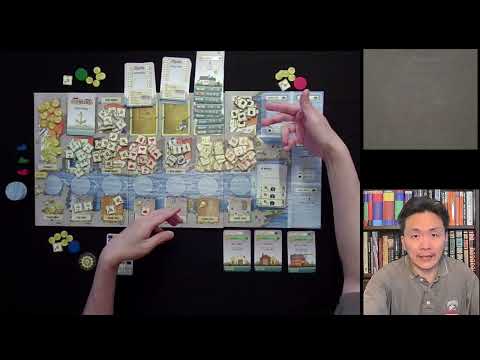
Le Havre - set up & play

Le Havre - set up & play

Instructional

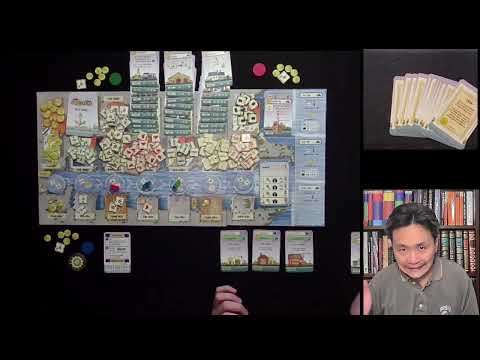
Le Havre - strategy blitz

Le Havre - strategy blitz

Instructional

MORE VIDEOS

FULL rules

Looking for the full details? Grab the complete rulebook as a downloadable PDF.

Play Board Games Online

Explore breakout hits and fan favourites with no downloads, setup or paywalls. Just click and play.

Play Now

more GAMES LIKE THIS